

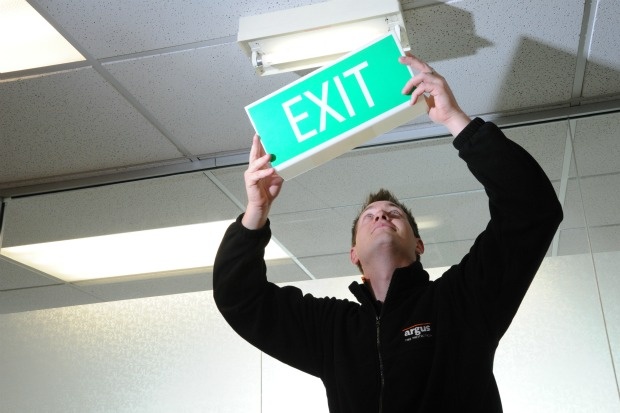
Emergency exit lights are fixtures in most modern buildings. They are familiar enough that we may take them for granted despite their essential role. What may be less familiar to some is the fact that these lights must undergo regular inspections. Building managers should be aware of the fact that these lights are installed to make fast egress possible in emergencies. How well they function can literally make the difference between life and death for a building's occupants. If you manage a building, you should understand the laws that govern emergency and exit light inspections.
Emergency and Exit Lighting Regulations
The National Fire Protection Administration (NFPA) is one of the organizations that govern emergency and exit lighting. You can find the various rules on emergency and exit lights in the NFPA's Life Safety Code. The most important of these rules dictate factors like:
- The placement of emergency and exit lighting. The NFPA's rules specify the location of signs and how floors should be illuminated. No point in an exit access area should be beyond 100 feet or the sign's rated viewing distance, whichever distance is less.
- The amount of emergency illumination. Emergency lighting should not be less than one lumen per square foot. At no point should maximum illumination at any one point exceed 40 times the minimum illumination. The point of this is to prevent overly bright and overly dark areas.
- How long emergency lights should last in an emergency. The NFPA states that emergency illumination should not last for less than 1.5 hours on full battery power in the event that normal lighting fails.
- The schedule for inspecting emergency and exit lighting. You should inspect emergency and exit lights every month. The NFPA's code also specifies that the monthly functionality tests of emergency and exit lights should last for 30 seconds. They also advise that building managers keep written records of monthly inspections. These records are important since the local authority having jurisdiction may require them. No more than five weeks should pass between monthly inspections. Along with the 30-second tests, building owners and managers should test emergency and exit lights once per year for 1.5 hours.